Birdwatching Around Duck Harbor Pond and Equinunk, PA: eBird Hotspots, Bald Eagles, and Where to Bird in Wayne County
Birdwatching Around Duck Harbor Pond and Equinunk, PA: eBird Hotspots, Bald Eagles, and Where to Bird in Wayne County. This birdwatching guide is a factual overview of the birds to look for, the best seasons and times of day, wintering bald eagles on the Upper Delaware River, and public-access birding hotspots in the Duck Harbor Pond area of Wayne County, Pennsylvania.
Last verified August 10, 2026 against eBird, NPS Upper Delaware, and Pennsylvania Audubon sources.
Duck Harbor Pond is a registered eBird hotspot (L12796128) in Damascus Township, Wayne County, near Equinunk, with more than 80 species reported over time. The pond, its wooded shoreline, and the surrounding northern hardwood forest sit on the Atlantic Flyway, near the Upper Delaware Important Bird Area (designated 1998 by Pennsylvania Audubon for the river corridor; the pond itself is not confirmed within the IBA boundary). A PFBC public boat launch on the southwestern shore at 41.749145, -75.211382, off Duck Harbor Road gives public access to the water; the surrounding 960 acres of land at The Woods at Duck Harbor are private community land, so bird from the public launch and public roads rather than crossing community roads or lots.
Quick Facts
Location
Duck Harbor Pond, Damascus Township, Wayne County, Pennsylvania, near Equinunk
eBird hotspot
Duck Harbor Pond (L12796128), with more than 80 species reported over time
Public access
PFBC public boat launch on the southwestern shore at 41.749145, -75.211382, off Duck Harbor Road. The surrounding 960 acres of land at The Woods at Duck Harbor are private community land.
Region
Near the Upper Delaware Important Bird Area (designated 1998 by Pennsylvania Audubon for the river corridor) on the Atlantic Flyway
Wintering eagles
The nearby Upper Delaware River hosts over 100 wintering bald eagles most winters (per the National Park Service), typically mid-December through mid-March
Nearby public land
State Game Lands 159, 9,446.5 acres managed by the Pennsylvania Game Commission, the largest publicly accessible natural area in Wayne County
Permit
No fee or permit to go birdwatching. On State Game Lands, wear blaze orange during hunting seasons.
Apps
eBird for the live species list and Merlin Bird ID for identification. Cell service is unreliable, so download offline maps first.
Birds to look for around Duck Harbor Pond
The birds below are well documented in the Upper Delaware region and are reasonable targets in and around Duck Harbor Pond and its surrounding forest. Presence and numbers change with the seasons; check the Duck Harbor Pond eBird hotspot for current reports.
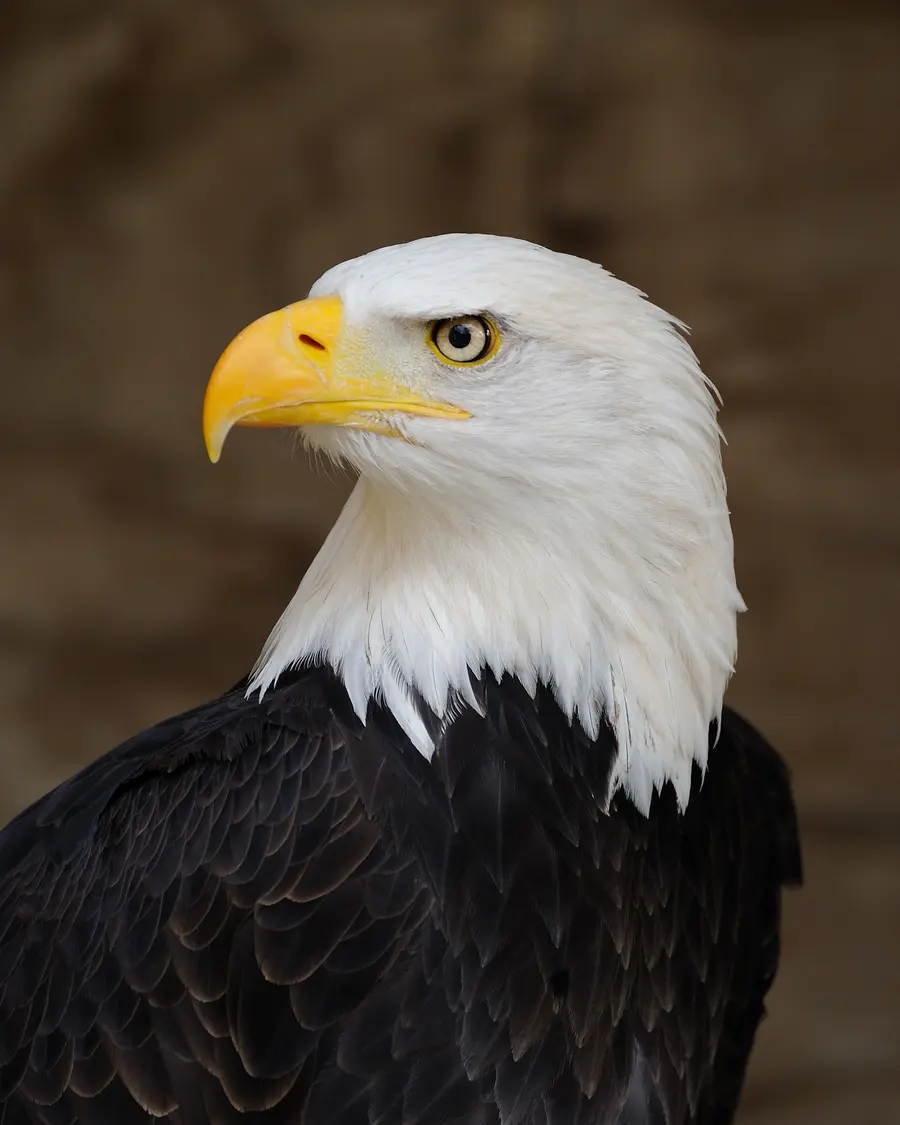
Photo: Saffron Blaze / CC BY-SA 3.0, via Wikimedia CommonsBald Eagle(Haliaeetus leucocephalus) · Raptor
The signature bird of the Upper Delaware region. Eagles nest and hunt along regional lakes and rivers year-round, and the nearby Upper Delaware River hosts one of the largest wintering concentrations in the Northeast, with over 100 eagles present most winters (per the National Park Service).
Size and look
Large raptor with a roughly 6 to 7 foot wingspan. Adults show the unmistakable white head and tail with a dark brown body; birds under about five years old are mottled brown and white and are often mistaken for other raptors.
Where to look
Perched in tall shoreline trees, soaring over open water, or along the Delaware River corridor. Scan bare snags near the water in winter.
Best season
Year-round for resident birds. Wintering eagles on the Upper Delaware are typically present from mid-December through mid-March.
Best time of day
Morning, when eagles fish and move between roosts and open water. Cold, clear winter mornings are prime for the Upper Delaware concentration.
Osprey(Pandion haliaetus) · Raptor
A fish hawk that patrols open water and dives feet-first for fish. Ospreys fish regional rivers and lakes and nest on tall structures and snags near water through the warm months.
Size and look
Wingspan of about 5 to 6 feet, white underneath with a dark eye stripe and a distinctive kinked, gull-like wing profile in flight.
Where to look
Hovering over open water before a plunge dive, or perched on a bare snag or channel marker near the shoreline.
Best season
Spring through fall (April through September). Ospreys migrate south for winter.
Best time of day
Mid-morning through afternoon, when they actively hunt over open water.
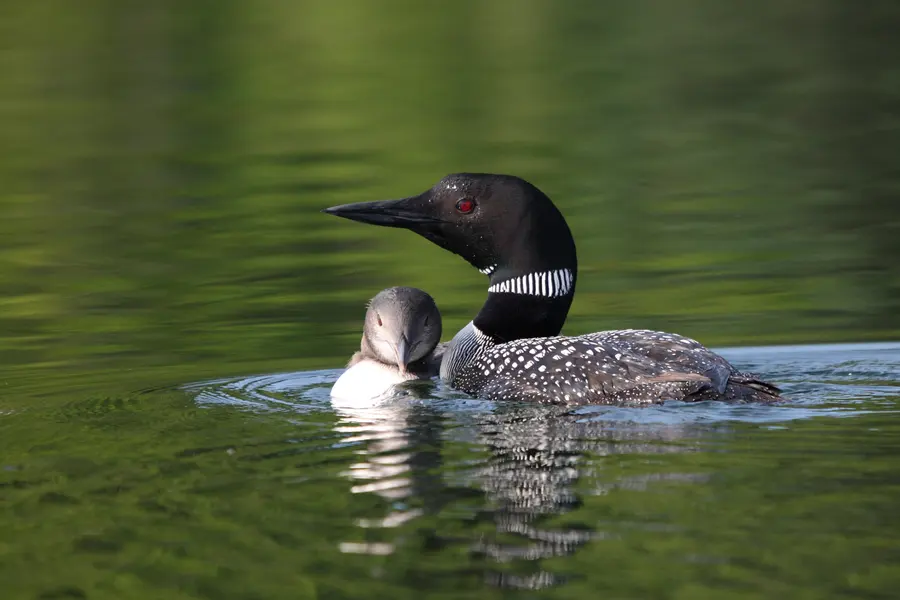
Photo: Cephas / CC BY-SA 3.0, via Wikimedia CommonsCommon Loon(Gavia immer) · Waterbird
A large diving waterbird that stages on big lakes and ponds in northeastern Pennsylvania during migration. Loons do not typically breed this far south, so most local sightings are migrants resting and feeding on open water.
Size and look
Heavy-bodied, low-riding diver. Breeding adults show a black head and checkered black-and-white back; migrants in fall are plain gray-brown above and pale below.
Where to look
Well out on open water, diving for fish. Listen for the yodeling call on calm spring evenings.
Best season
Spring (April to May) and fall (October to November) migration windows.
Best time of day
Early morning and evening on calm water, when the surface is glassy and diving birds are easy to spot.
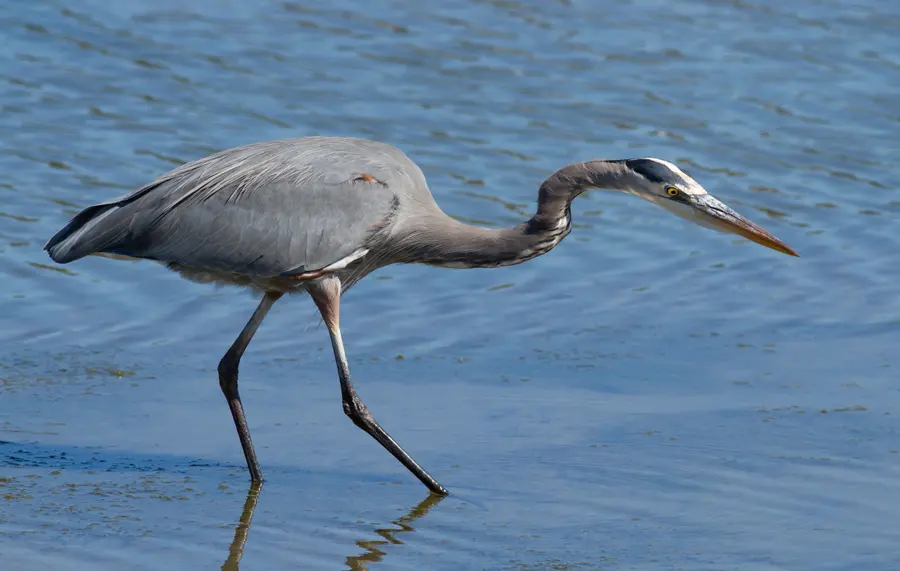
Photo: Frank Schulenburg / CC BY-SA 3.0, via Wikimedia CommonsGreat Blue Heron(Ardea herodias) · Waterbird
A tall wading bird that stalks the shallows and shorelines of ponds, wetlands, and slow streams. A reliable year-round waterbird wherever open water persists.
Size and look
Nearly four feet tall with a roughly 6 foot wingspan. Blue-gray body, long neck held in an S-curve in flight, and slow, deep wingbeats.
Where to look
Standing motionless in shallow water along the shoreline, in weedy back coves, or at the mouths of inflowing streams.
Best season
Spring through fall; some birds linger into winter wherever water stays open.
Best time of day
Dawn and dusk, when herons feed most actively along the shallows.
Common Merganser(Mergus merganser) · Waterbird
A large fish-eating duck that breeds along the Upper Delaware River and winters on open water throughout the region. Look for the trailing family lines of chicks in early summer.
Size and look
Long, low-slung duck with a thin red bill. Males are white-bodied with a dark green head; females are gray with a rusty head and a crisp white chin.
Where to look
Swimming and diving in open water, often in small groups; hauled out on rocks and logs along the river and shoreline.
Best season
Year-round where water stays open; most numerous in late fall and winter.
Best time of day
Morning, when rafts of birds are actively feeding.
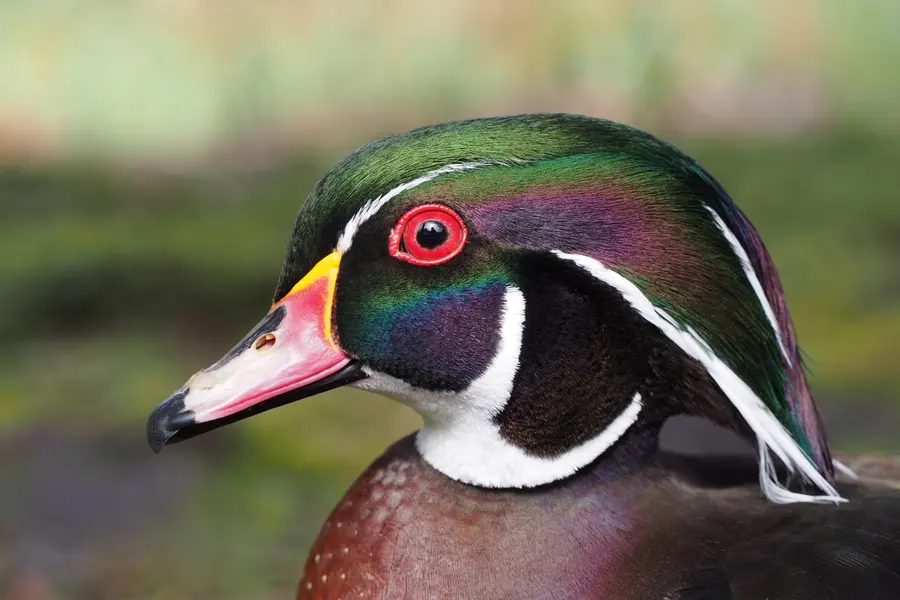
Photo: Francis C. Franklin / CC BY-SA 3.0, via Wikimedia CommonsWood Duck(Aix sponsa) · Waterbird
A colorful cavity-nesting duck of wooded wetlands, quiet back coves, and beaver ponds. One of the most ornate waterfowl in the region.
Size and look
Medium-sized duck. Drakes are iridescent green and chestnut with bold white facial lines; hens are gray-brown with a distinctive white teardrop eye patch.
Where to look
Shaded back coves, flooded timber, wetland edges, and beaver ponds rather than wide open water.
Best season
Spring through fall (March through October).
Best time of day
Early morning and late afternoon, when they move between roosting and feeding areas.
Belted Kingfisher(Megaceryle alcyon) · Waterbird
A stocky, big-headed waterbird that hunts small fish from perches over the water. Its loud, rattling call usually announces it before you see it.
Size and look
Blue-gray above with a shaggy crest and a white collar. Females add a rusty band across the breast, one of the few North American birds where the female is more colorful.
Where to look
Perched on a bare branch or wire over the water, or hovering before a headfirst dive along the shoreline.
Best season
Spring through fall; some linger into winter wherever water stays open.
Best time of day
Throughout the day; most active in calm morning and evening light.
Scarlet Tanager(Piranga olivacea) · Forest songbird
A brilliant songbird of mature deciduous and mixed forest. The males are among the most striking breeding birds in the northern hardwoods that surround the pond.
Size and look
Robin-sized. Breeding males are blazing red with jet-black wings and tail; females and fall birds are olive-yellow with darker wings.
Where to look
High in the leafy canopy of mature forest. Listen for the burry, robin-like song and the distinctive chick-burr call.
Best season
Late spring through summer (May through August), when they are on breeding territory.
Best time of day
Early morning, during the dawn chorus, is by far the best time to find canopy songbirds.
Wood Thrush(Hylocichla mustelina) · Forest songbird
A forest thrush famous for its flute-like, ethereal song. An Audubon priority species that breeds in the mature forests of the Upper Delaware region.
Size and look
Smaller than a robin, warm reddish-brown above with a white breast heavily marked with round black spots.
Where to look
In the shaded understory and mid-story of mature, moist deciduous forest, often near the ground.
Best season
Late spring through summer (May through August).
Best time of day
Dawn and dusk, when the song carries farthest through the forest.
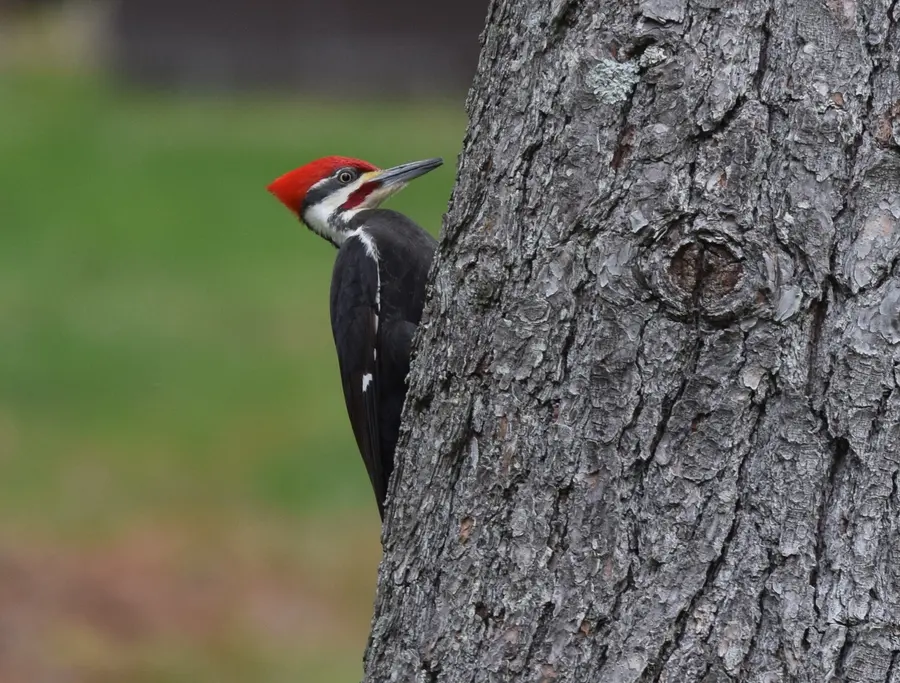
Photo: Andy Reago & Chrissy McClarren / CC BY 2.0, via Wikimedia CommonsPileated Woodpecker(Dryocopus pileatus) · Forest songbird
The largest woodpecker in the region, a crow-sized year-round resident of mature forest. Its rectangular excavations in dead trees are a telltale sign it is nearby.
Size and look
Nearly crow-sized, black with a flaming red crest and bold white neck stripes. Deep, resonant drumming and a loud, laughing call.
Where to look
On large standing dead trees and downed logs in mature forest. Watch for fresh, large rectangular holes at the base of dead snags.
Best season
Year-round resident.
Best time of day
Morning, when birds are actively foraging and drumming.
Best times to bird, month by month
A general month-by-month guide based on northern Wayne County seasons and Atlantic Flyway migration patterns. Timing shifts a little year to year with the weather.
January: Peak wintering bald eagle season on the nearby Upper Delaware River. Scan bare shoreline snags from public roads and pull-offs.
February: Eagle numbers stay high. Look for common mergansers and other diving waterfowl wherever water stays open.
March: Most wintering eagles head north by mid-to-late March. Early returning waterfowl arrive on opening water.
April: Spring migration begins. Loons and waterfowl move through on the Atlantic Flyway. Ospreys return to fish and nest near water.
May: Peak songbird migration. Warblers, tanagers, thrushes, and vireos fill the forest. The dawn chorus is at its richest all year.
June: Breeding forest songbirds. Scarlet tanager, wood thrush, and other breeders sing on territory. Wood ducks lead broods in the back coves.
July: Summer residents. Great blue heron, belted kingfisher, osprey, and common merganser families work the shoreline and open water.
August: Late summer and early migrants. Shorebirds and early southbound migrants appear as songbird song tapers off.
September: Fall migration. Warblers and raptors move south. Waterfowl numbers begin to build on the ponds.
October: Waterfowl and loons. Migrating common loons and diving ducks stage on open water. Foliage peaks in the first two weeks.
November: Late waterfowl. The last waves move through, and common mergansers gather on open water as smaller ponds start to freeze.
December: Eagles return. Wintering bald eagles arrive on the Upper Delaware, typically from mid-December, alongside resident birds and winter finches.
Wintering bald eagles on the Upper Delaware
The Upper Delaware River, a short drive east of Duck Harbor Pond, hosts one of the largest wintering bald eagle populations in the Northeast. Each winter over 100 eagles migrate to the region from their northern breeding areas, according to the National Park Service. Wintering birds are typically present from mid-December through mid-March, with numbers peaking in January and February. Resident bald eagles can also be seen in the area year-round. View eagles from your vehicle or established pull-offs along public roads and the river corridor, keep a respectful distance, and never enter private property to get closer.
Where to bird near Duck Harbor Pond
Duck Harbor Pond is best paired with the public-access birding hotspots nearby, many of them on State Game Lands 159. Distances are approximate driving distances; species counts are all-time eBird totals and grow over time.
State Game Lands 159 – Alder Marsh Pond Area · about 1.8 miles away · 106 species
Wetland and marsh habitat on public State Game Lands, good for waterfowl, marsh birds, and edge songbirds.
Browning Beaver Meadow Sanctuary · about 2.5 miles away · 99 species
A beaver-meadow wetland complex with a mix of open water, brush, and forest edge.
Lower Woods Pond · about 3.1 miles away · 84 species
A quiet pond with open water and shoreline habitat for waterbirds and migrants.
State Game Lands 159 – Upper Woods Pond · about 3.5 miles away · 117 species
A deep 80-acre glacial lake on public State Game Lands 159 with a boat ramp; one of the most productive nearby waterbird spots.
Miller Pond · about 7.6 miles away · 131 species
The highest all-time species count among the nearby hotspots, with varied pond and wetland habitat.
Upper Delaware SRR – Equinunk Area (Equinunk Creek mouth) · about 7.9 miles away · 79 species
River-corridor habitat within the Upper Delaware Important Bird Area, where Equinunk Creek (the outlet that Duck Harbor Pond drains into) meets the Delaware River. River Road (TR-651) off Lordville Road is a quiet gravel birding route, best for wintering bald eagles, common mergansers, swallows, and breeding warblers such as Black-throated Green and Blackburnian.
Prompton SP – Prompton Dam · about 45 minutes south
A wider-area public alternative: a U.S. Army Corps of Engineers reservoir at Prompton State Park and a Pennsylvania winter waterfowl survey lake, good for migrating ducks, geese, grebes, and loons.
Belmont Lake · about 35 minutes south
A wider-area public alternative near Pleasant Mount: a PFBC public lake in northern Wayne County with open water and wooded edges, productive for waterfowl, ospreys, bald eagles, and migrant songbirds.
Birding ethics and access
Bird from the PFBC public boat launch, public roads, and public State Game Lands. The surrounding 960 acres of land at The Woods at Duck Harbor are private community land; do not enter community roads or lots without permission.
Keep your distance from nests and roosts, and never linger where you are causing birds to alarm-call or flush.
Do not play recorded bird calls near nesting birds, and avoid crowding rare or sensitive species.
On State Game Lands 159, be aware of hunting seasons. Wear blaze orange in fall and winter and check the Pennsylvania Game Commission hunting calendar before you go.
Leave no trace, keep dogs leashed or at home, and log your sightings on eBird to help track the birds of the area.
Cell service along Duck Harbor Road is unreliable. Download offline maps and Merlin bird packs before you arrive.
Common birdwatching questions
What birds can you see at Duck Harbor Pond?
Duck Harbor Pond is a registered eBird hotspot (L12796128) with more than 80 species reported over time. In and around the pond, birders regularly look for waterbirds such as great blue heron, common merganser, wood duck, belted kingfisher, and migrating common loons; raptors including bald eagle and osprey; and forest songbirds such as scarlet tanager, wood thrush, and pileated woodpecker in the surrounding northern hardwoods. Species and numbers vary by season, so check the live eBird hotspot list before a visit.
Is Duck Harbor Pond a good place to go birdwatching?
Yes. Duck Harbor Pond is a lightly birded but promising eBird hotspot (L12796128) in Damascus Township, Wayne County, Pennsylvania. A PFBC public boat launch on the southwestern shore at 41.749145, -75.211382, off Duck Harbor Road gives public access to the water; the surrounding 960 acres of land at The Woods at Duck Harbor are private community land, so bird from the public launch and public roads rather than crossing community roads or lots. For a richer species list, pair it with nearby public spots on State Game Lands 159 and the Upper Delaware River.
When is the best time of year for birdwatching near Duck Harbor Pond?
Spring migration (April to May) and fall migration (September to November) bring the widest variety, including waterfowl, loons, and warblers moving along the Atlantic Flyway. Late spring and early summer (May to June) are best for breeding forest songbirds during the dawn chorus. Winter (mid-December through mid-March) is the season to look for bald eagles, which concentrate on the nearby Upper Delaware River in one of the largest wintering populations in the Northeast.
Can I see bald eagles near Duck Harbor Pond?
Yes. Bald eagles are present in the region year-round, and the nearby Upper Delaware River hosts one of the largest wintering eagle concentrations in the Northeast, with over 100 eagles most winters according to the National Park Service. Wintering eagles are typically present from mid-December through mid-March, with peak numbers in January and February. View eagles from public roads, pull-offs, and the river corridor, and keep a respectful distance so you do not flush them from perches or roosts.
Where else can I go birding near Duck Harbor Pond?
Several strong public-access eBird hotspots are within a short drive: State Game Lands 159 – Upper Woods Pond (an 80-acre glacial lake with a boat ramp), State Game Lands 159 – Alder Marsh Pond Area, Browning Beaver Meadow Sanctuary, Lower Woods Pond, Miller Pond, and the Upper Delaware Scenic and Recreational River near Equinunk. State Game Lands 159 totals 9,446.5 acres and is the largest publicly accessible natural area in Wayne County, managed by the Pennsylvania Game Commission.
Do I need a permit to go birdwatching, and where can I go?
There is no fee or permit to go birdwatching. You can bird from the PFBC public boat launch at Duck Harbor Pond and from public roads and pull-offs, and you can walk the public State Game Lands 159. The surrounding 960 acres of land at The Woods at Duck Harbor are private community land, so do not enter private community roads or lots without permission. On State Game Lands, be aware of hunting seasons – wear blaze orange in fall and winter, and check the Pennsylvania Game Commission hunting calendar before you go.
What birding apps and etiquette should I use?
Use eBird to check the live species list and log your own sightings, and the free Merlin Bird ID app to identify birds by sight or sound. Practice good birding ethics: keep your distance from nests and roosts, never play recorded calls near nesting birds, stay on public land and roads, and leave no trace. Cell service along Duck Harbor Road is unreliable, so download offline maps and any bird packs before you arrive in the area.
Verified against public sources
Birding facts on this page are verified against the eBird hotspot for Duck Harbor Pond, the National Park Service Upper Delaware birds page, the Pennsylvania Audubon Important Bird Area program, and the Pennsylvania Game Commission:
eBird species counts are all-time totals that grow as birders submit checklists. Bird presence and numbers vary by season and year; check the live eBird hotspot before a trip.
Species photo credits
Species photos are used under Creative Commons licenses via Wikimedia Commons, each credited to its photographer with a link to the source file and license terms:
Independent community resource. This site is created and maintained by neighbors. It is not affiliated with Duck Harbor Company, LLC or with Duck Harbor Group, and it does not represent any community board, association, or official authority. Always follow current Pennsylvania Game Commission and landowner rules.


,_hunting.jpg)

.jpg)